Mixed luminaire environment

Mixed luminaire environment

Your luminaire environment is mixed. Your control does not have to be.

challenges

Most cities do not manage one type of luminaire

More luminaire generations

Older luminaires, LED upgrades and decorative fittings often coexist in the same estate.

Different control readiness

Some luminaires are Zhaga or NEMA-ready. Others need, for different reasons, another way into the control system.

Fragmented visibility

Without a flexible control strategy, parts of the infrastructure remain outside the operational overview.

Mixed Luminaires

DALI delivers Several Routes to control

Standard socket installation, NEMA as example

DIN rail installation in cabinet, controlling DALI bus 

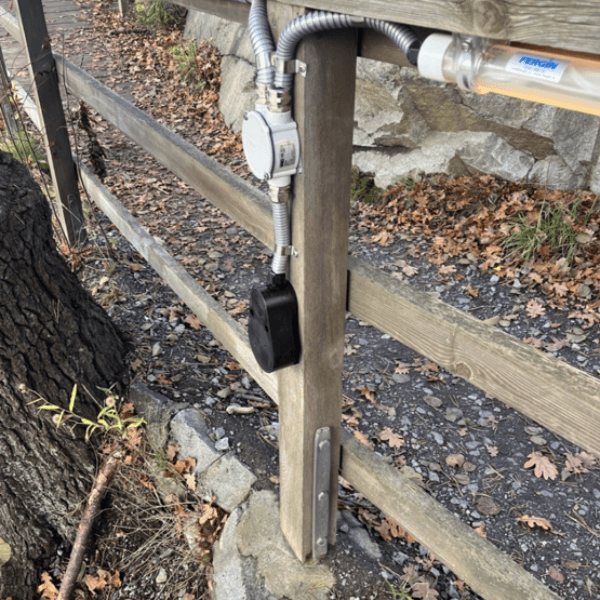
External installation out of reach
External installation, rugged case 

Motion sensors, Radar or PIR

Luminaire Controllers

One for every type

Standard Sockets

For luminaires prepared with NEMA or Zhaga sockets, GreenStreet supports standard luminaire-level control.

DALI bus from cabinet

Where several luminaires share a DALI bus, cabinet-mounted control can extend control without placing a controller on every luminaire.

External control for non-socket luminaires

For luminaires without a suitable socket, an externally mounted controller can provide a practical route through DALI/D4i to connected control.

Motion-triggered lighting

Third-party sensor options can support motion-triggered lighting where activity-based behaviour creates value.

Designed for real municipal environments

Designed for real municipal environments

Older assets can still have a role

Control where standard sockets are not practical

Add motion response where activity changes

Build better visibility

GreenStreet
With Dali/D4i at the core, GreenStreet can help improve inventory, status overview and maintenance planning. The level of detail depends on the installation, but the goal is the same: a clearer operational view of the lighting network.

IMPACT

What the city gains

Extend control without replacing everything

Control more of the existing infrastructure while modernising step by step.

Reduce fragmented operation

Bring different control methods into one coherent operational structure.

Add precision where it matters

Use advanced control only where the location, use case or savings potential justifies it.
FAQ

frequently Asked Questions

No. Zhaga and NEMA sockets are practical where they are available, but they are not the only route to connected control. GreenStreet can also support other control approaches, including DALI-based control from the cabinet or externally mounted controllers where the luminaire design does not allow socket-based installation.
In many cases, yes. It depends on the luminaire, driver and available control interface. Where DALI is available, there may be a practical route to control even if the luminaire is not prepared with a Zhaga or NEMA socket
Cabinet-based DALI control can be used where several luminaires are connected on the same DALI bus. This can make it possible to control a group of luminaires from the cabinet, without placing an individual controller on every luminaire.
An externally mounted controller can be relevant when the luminaire has no suitable socket, when the form factor makes socket mounting impractical, or when the city wants to add control without replacing the luminaire.
Yes, where the installation and use case support it. Capelon works with third-party sensor partners, including radar-based and passive infrared sensor options, to support motion-triggered lighting in selected environments.
GreenStreet can help improve inventory and operational visibility where relevant data is available from the installation. The level of detail depends on the luminaire, driver and how data has been implemented, but the goal is to give the municipality a clearer view of the lighting infrastructure over time.

Plan control for your actual lighting infrastructure

Talk to Capelon about the possibilities for your mixed environment